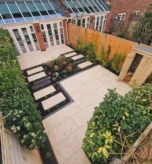
A well-laid patio should last for years, often decades, but it still needs looking after.
Paving aftercare is not a small subject. Different materials need different care, and the British weather does not always make life easy. Here in the south of England, patios can deal with freezing winter temperatures, low sun, damp, fallen leaves, high summer heat and regular everyday use.
So, the best advice is simple:
Clean little and often.
Leaving a patio untouched for years and then attacking it with the most powerful pressure washer you can find is rarely the best answer. Regular, sensible maintenance is usually safer, easier and better for the paving in the long run.
Why Patio Aftercare Matters
Paving is outside all year round. It gets walked on, rained on, dried out, frozen, heated, stained and covered in organic matter.
Over time, patios can develop:
- Black spot
- Lichen
- Moss
- Algae
- Leaf stains
- Dirt marks
- Rust marks from furniture or planters
- Weed growth in joints or cracks
Some of this is normal. Outdoor materials age and weather. But with the right aftercare, you can keep your patio looking good and avoid causing unnecessary damage while cleaning it.
The key is understanding what type of paving you have.
Looking After Natural Stone Paving
Natural stone includes materials such as sandstone, slate, limestone and other quarried paving.
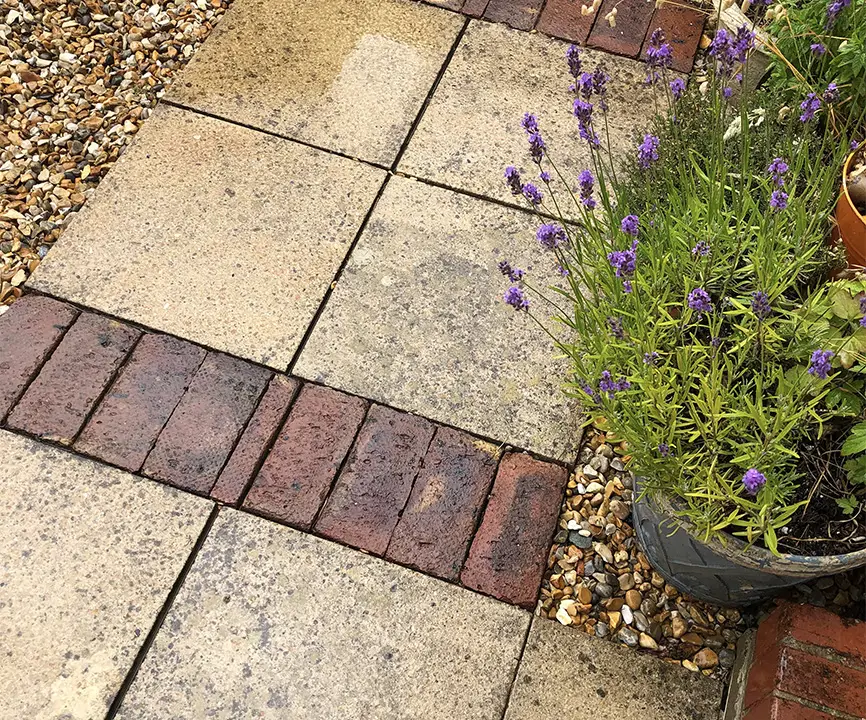
It is beautiful, but it is still a natural product. That means it can mark, weather and change over time. In our climate, natural stone patios commonly develop lichen, black spot and general staining, especially in shaded or damp areas.
For most natural stone patios, we recommend regular cleaning at the end of the main season and again before the next one begins.
Pressure washing can be used, but carefully.
The mistake many people make is holding the pressure washer too close to the stone or using too much force. Very powerful pressure washers can damage the surface of some paving, affect the pointing, and, in some cases, contribute to delamination.
A circular patio-cleaning attachment is usually better than a direct pressure-washer lance because it distributes pressure more evenly.
Be Careful With Pressure Washing
If your patio is pointed with sand and cement, aggressive pressure washing can blow out the pointing over time.
That does not mean you can never pressure wash. It means you should clean carefully and regularly rather than leaving the patio until the only option is heavy cleaning.
Also avoid soaking a patio immediately before freezing weather. Even when paving is laid properly on a full bed, pointing and bedding materials are designed to allow a degree of moisture movement. If the area becomes excessively wet and then freezes, freeze-thaw action can cause problems.
So, sensible timing matters.
Should You Seal Natural Stone Paving?
Paving can be sealed, but it is not always necessary.
Some sealants can slightly change the finish of the stone, sometimes leaving a mild sheen or glossy look. Others wear away with foot traffic, weather and regular use, meaning repeat applications may be needed.
For many patios, especially in normal domestic gardens, regular cleaning is often the better route.
That said, every patio is different. If you are unsure whether your paving should be sealed, it is worth asking before applying anything. Once a sealant changes the appearance of the stone, it is not always easy to reverse.
Patio Cleaning Products and What to Avoid
There are plenty of patio cleaning products available, from simple soap-based cleaners through to stronger chemical treatments.
For general cleaning, mild soap and water can be enough for light maintenance.
For more stubborn organic growth, products such as Patio Magic or similar patio cleaners are commonly used. Jeyes Fluid is another traditional option that some people use for cleaning and disinfecting suitable outdoor areas.
Stronger products, such as brick acid or brick and patio cleaners, should be treated with real care.
Most importantly:
Do not use brick acid on limestone.
It can damage the surface. If there is any doubt about the material or the stain, get advice first. It is much cheaper to ask than to permanently mark a patio.
Always read the manufacturer’s instructions before using any cleaning product. If the label says test a small patch first, test a small patch. If it says wear gloves, eye protection or a mask, do it.
Looking After Concrete and Cement-Based Paving
Concrete and cement-based paving can be looked after in a similar way to natural stone in terms of general cleaning.
However, there is one important difference.
Many concrete paving products have a surface finish, sheen, colour or glaze that gives them their original look. Over time, that finish can wear down through UV exposure, footwear, general use and aggressive pressure washing.
As that happens, the internal make-up of the paving can start to show through, and the original colour or effect may fade.
Again, little and often is the answer.
Clean regularly, avoid overly harsh pressure washing and use suitable products in line with the manufacturer’s guidance.
How to Clean Block Paving
Block paving needs a slightly different approach.
The common issue with block paving is the build-up of moss and weeds in the joints. Many people reach straight for the pressure washer, but that is usually not my first recommendation.
Where possible, block paving is better cleaned with a brush system. This could be a stiff hand brush, a scraper or, for larger areas, a mechanical brush.
The reason is simple. Traditional block paving is often laid on sand. Some modern installations may use grit or grano depending on drainage, specification or SuDS requirements, but the principle is the same: too much forced water can wash out the laying material beneath or between the blocks.
That washout can contribute to dips and movement over time.
When I was training, those dips were wonderfully called “elephant’s footprints”. Sometimes they are caused by poor installation, but often they are linked to movement, weight and material loss beneath the paving.
So yes, with block paving, the answer is often brush and hard work.
Failing that, call in a professional.
Looking After Porcelain Paving
Porcelain paving, also known as ceramic or vitrified paving, is one of the easiest patio materials to maintain.
When customers ask how to clean porcelain paving, my answer is usually:
“With a mop.”
That is only partly a joke.
Porcelain is, in many ways, an external version of the tiles you might have indoors. Good-quality external porcelain should have the correct slip rating, suitable texture and be laid to the right fall so water can run off properly.
It can still collect dirt, algae and marks because it is outside, but it is generally very stable and straightforward to clean.
A hose, mop, squeegee or warm water with a mild cleaner will usually deal with most day-to-day dirt.
Can You Pressure Wash Porcelain Paving?
Porcelain paving can usually cope with pressure washing, but that does not mean it should be your default method.
We use external tile grout when pointing porcelain. While it can take some cleaning pressure, regular aggressive pressure washing may shorten the effective life of the grout.
For most porcelain patios, a gentler approach is better.
Use warm water, a suitable mild cleaner, a mop, a squeegee or a soft brush. Keep it simple.
Removing Rust Marks From Porcelain Paving
There is one type of mark on porcelain that does need a specific approach: rust.
Rust marks can come from metal furniture, steel planters or other metal objects left on the paving.
For these marks, use a dedicated rust stain remover designed for paving or tiles. These products are widely available from hardware stores, builders’ merchants and online retailers.
When applied, many rust removers create a purple reaction as they work. Sometimes one treatment is enough. Sometimes it takes more than one attempt.
The important thing is to use the right product rather than scrubbing aggressively and hoping for the best.
General Paving Aftercare Advice
Whatever paving you have, a few principles apply:
- Clean regularly rather than waiting until the patio is heavily stained
- Avoid overly aggressive pressure washing
- Use the right product for the right material
- Be careful before using acids or strong chemical cleaners
- Never use brick acid on limestone
- Test cleaning products on a small area first
- Follow the manufacturer’s safety instructions
- Avoid soaking paving just before freezing weather
- Ask for advice if you are unsure
Most patio problems become harder to solve the longer they are left.
A bit of routine aftercare can save a lot of effort later.
Need Advice on Patio or Paving Aftercare?
Every patio is different. The right aftercare depends on the paving material, the way it was installed, the pointing used, the surrounding planting, shade, drainage and how the space is used.
The advice above is based on experience, but it will not be the exact answer for every garden.
If you are unsure how to clean or care for your patio, speak to a professional before using strong products or aggressive cleaning methods.
And if MNB Designs has installed your paving, we are always happy to talk you through the best aftercare for your specific garden.
About the author: