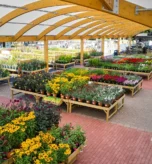
Our gardens are evolving.
I have worked in this industry for a little over 30 years, and when I look back over that time, the biggest change I have seen has happened in the last few years.
This is not just a fashion, a fad or the latest garden trend. This feels like real change.
I do not say this lightly, but I am not sure we are a nation of gardeners in quite the same way any more.
That may sound a little gloomy, but it does not have to be. Not all change is bad. The way we use our gardens has always reflected the way we live, and the way we live has changed.
The Garden Has Always Reflected the Times
Gardens have always held up a mirror to the culture around them.
For some, they were once a sign of privilege. For others, they were something to visit, admire or aspire to. Over time, especially as homes and suburbs changed, the garden became a much more normal part of British life.
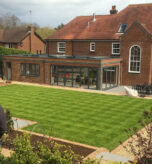
A lawn, a few borders, somewhere to sit, somewhere for the children to play. For many people, that became the expected version of a garden.
The invention and development of accessible lawn mowers helped shape that. Suddenly, a neat lawn was not just for estates and grand houses. It became something ordinary households could maintain.
That familiar version of the British garden is still with us, of course. But it is no longer the only version.
Why Modern Gardens Are Changing
Modern life has changed, and gardens have changed with it.
Many households are busier than they used to be. More homes rely on two incomes. New build gardens are often smaller. Time is tighter. Costs are higher. Children do not always use outdoor space in the same way previous generations did.
That does not mean gardens matter less.
In many ways, they matter more.
The change is in how people want to use them. For some, the traditional lawn and borders still make perfect sense. For others, the garden has become a more practical extension of the home.
That is why terms such as “outdoor room” and “outdoor living space” have become so common. They reflect a shift away from gardens that are only about mowing, weeding and planting, towards gardens that also support everyday life.
From Lawns and Borders to Outdoor Living
The modern garden is often expected to do more.
It may need to be a place to relax after work. A space for children. A dining area. A home office outlook. Somewhere to entertain. Somewhere quiet to sit with a coffee. Somewhere to cook, gather, read, work or switch off.
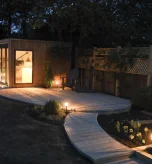
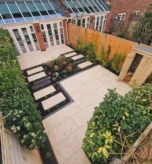
That is why materials and features such as porcelain paving, pergolas, garden buildings, outdoor kitchens, seating areas and lighting have become more popular.
Used well, these features can make a garden more usable for more of the year.
The risk, of course, is going too far the other way. A garden should not become just another hard-surfaced room with a fence around it. It still needs life, softness and seasonal change.
The best modern gardens find a balance.
They give people the practical space they need, but still leave room for plants, wildlife and the natural world.
Smaller Spaces Still Deserve Good Design
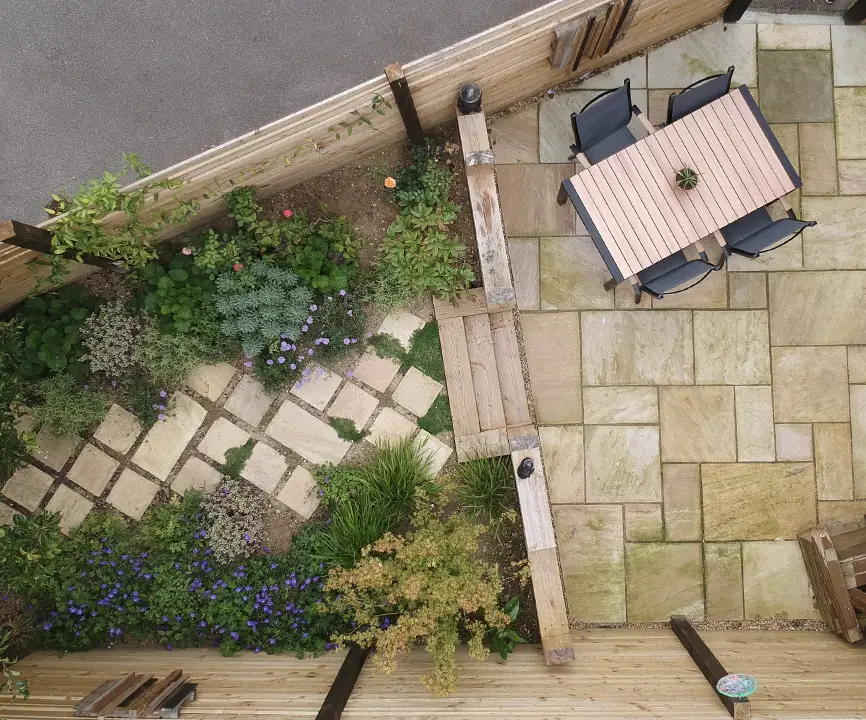
A smaller garden does not have to be a poor garden.
In fact, smaller spaces often need better design because every choice matters more. The paving, planting, screening, seating, storage and movement through the space all need to work together.
When space is limited, it is easy to make the garden feel cluttered or overly hard. But with the right layout, a smaller garden can still feel generous, calm and useful.
That might mean using planting to soften boundaries, choosing materials carefully, creating built-in seating, adding height with trees or structures, or making one space serve more than one purpose.
Modern garden design is not about squeezing in every possible feature.
It is about understanding how the space will actually be used.
The Outdoor Room Still Needs Nature
There is nothing wrong with wanting a garden that works as an outdoor room.
A well-designed seating area, covered pergola or garden studio can completely change how often a garden is used. These things can encourage people to spend more time outside, and that is a good thing.
But the garden still has to be a garden.
Plants matter. Soil matters. Shade matters. Birds, bees, insects and small mammals matter. Even in the most modern outdoor space, there should be room for life.
That might be as simple as:
- Leaving a wilder corner
- Adding pollinator-friendly planting
- Choosing trees or shrubs for structure
- Reducing unnecessary hard landscaping
- Using permeable surfaces where possible
- Creating planted borders instead of bare fence lines
- Allowing seasonal change instead of trying to control everything
A modern garden does not need to be wild everywhere. But it should not be lifeless either.
A Responsibility to Make Space for Wildlife
Those of us lucky enough to own a garden have something increasingly valuable.
Outdoor space is a privilege. Even a small garden gives us the chance to create something that benefits more than just ourselves.
That does not mean every garden has to become a meadow or woodland. It does mean we should think carefully about the choices we make.
Can we include more planting?
Can we soften the hard landscaping?
Can we reduce waste?
Can we use materials well?
Can we leave part of the garden a little less controlled?
Can we create somewhere for insects, birds and wildlife to exist alongside us?
These are not just design choices. They are stewardship choices.
Designing Gardens for Real Modern Life
The modern garden is not one thing.
For some people, it is still a lawn, borders and a greenhouse. For others, it is a low-maintenance outdoor space for family life, entertaining and relaxing. For many, it is somewhere in between.
The important thing is to design gardens around real life.
A garden should suit the people using it, the property it belongs to and the level of maintenance the owner can realistically manage.
It should be practical, beautiful and honest.
And wherever possible, it should make room for nature.
Because while our gardens are changing, their value has not disappeared. If anything, it has become more important.
About the author: